All the latest UK technology news, reviews and analysis

Eurid boss cautious on generic domain names and DNSSec

by Phil Muncaster

17 Nov 2010

Be the first to comment

  • Tweet this
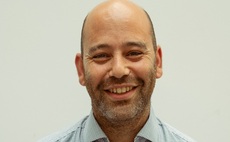
Marc Van Wesemael

Marc Van Wesemael is a refreshing rarity in a domain name industry hidebound by political machinations and the promotion of vested interests; a senior figure unafraid to speak candidly about the industry and his somewhat controversial registry, Eurid.

After 10 years as managing director of not-for-profit DNS Belgium, the registry for the country-level .be domain, Van Wesemael moved across to the European Commission-backed Eurid to set up the .eu domain.

Unsurprisingly, he is optimistic about the extension's success in the five years since it was launched, but sees some challenges to introducing internationalised domain names (IDNs) to the mix, something that Icann is pushing despite opposition.

"IDNs are quite a challenge to do and to do well, but there has been a lot of interest. About two per cent of our portfolio has accented characters or Greek or Cyrillic," he said.

"I have mixed feelings about them, though, because they will be of mixed value. Everyone has the right to use their own language on the internet, which is the main driver in this push for IDNs, but the internet is the ultimate example of globalisation.

"So if I have to type Chinese characters to get to the site I want, it is just not practical. So there is a bit of a contradiction there."

In any case, internet users are unlikely to see the full impact of IDNs until .eu is also internationalised, according to Van Wesemael. So is he concerned about the prospect of scammers using the newly expanded list of characters to abuse the system by registering typo-squatting domains?

"Typo-squatting is a valid concern. The Cyrillic 'A', for example, looks like the Latin 'A', so there could be a risk of confusion. But we've not seen it in practice because we don't allow mixed scripts such as Cyrillic combined with Latin," he said.

Elsewhere, the domain name industry has made significant ground in securing the infrastructure of the internet, most notably with DNS Security Extensions (DNSSec), although even here Van Wesemael has his reservations.

"I'm sure it will become the standard in the future but, like any new technology, it will take time. It is quite a complex procedure and will take time for people to adopt. It does need extra work and it's not easy. It's important that registries try to make it as easy as possible to implement DNSSec," he explained.

"It only solves one problem, not phishing or cyber-squatting, so we'll always have a situation where the criminal is one step ahead of the industry."

Do you agree?


Add your comment

We won't publish your address
By submitting a comment you agree to abide by our Terms & Conditions. Your comment will be moderated before publication.

Poll

The workplace of the future poll - in association with IBM

What will be the biggest change to corporate technology in the future?

89%

6%

1%

3%

1%

Connect with V3.co.uk

Sign up to our daily or weekly newsletters

Riso

Colour printing: why the bill keeps outstripping the budget

The wrong printers, for the wrong tasks on the wrong contracts

Qlikview

Magic quadrant for business intelligence platforms

Who leads the BI pack and who should we be watching out for?

Lean Business Analyst, LEAN Six Sigma

My Client is looking for a strong BA with significant...

Awareness & Service Improvement Specialist x 2

Awareness & Service Improvement Specialist x 2...

SQL Server Developer - T-SQL , SSRS

SQL Server Developer, SQL Server 2008, T-SQL, SSRS, DBA...

C++ developer, high frequency trading, City, London

C++ developer, high frequency trading, City, London...

To send to more than one email address, simply separate each address with a comma.